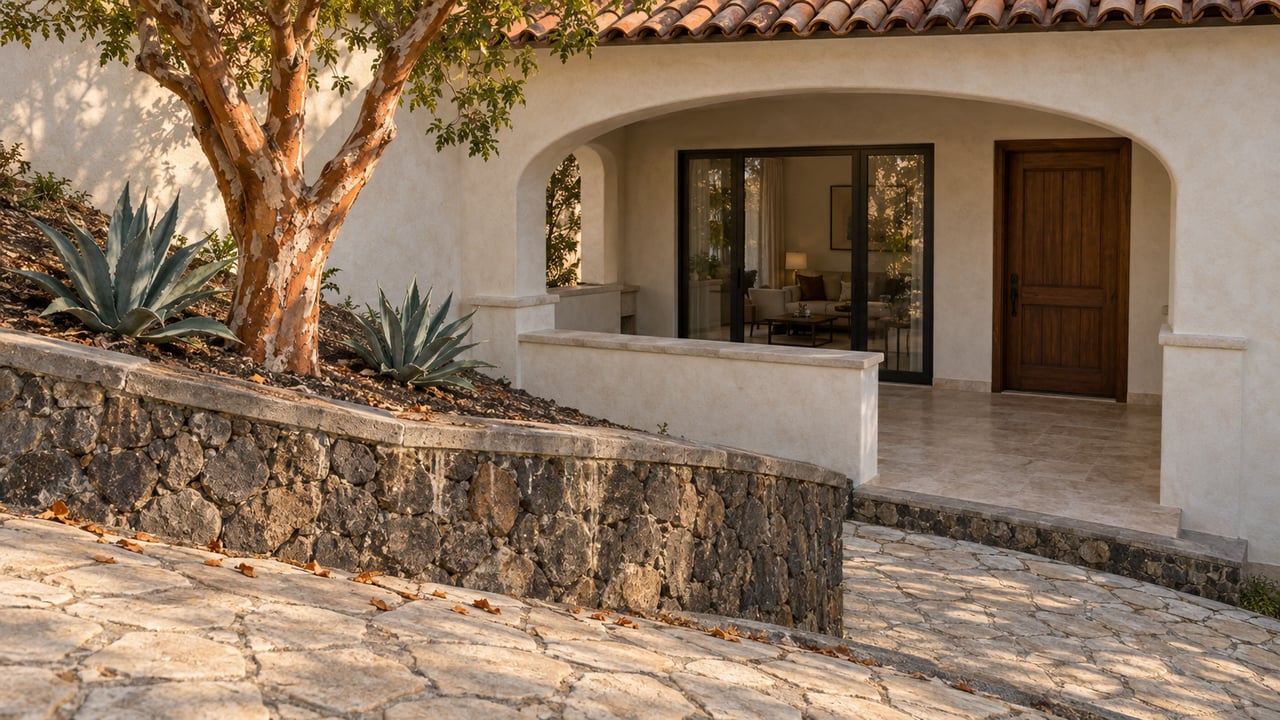
In March 2021, an attorney named Alex Moskowitz stood before the Board of Land Use Appeals asking, again, for a ruling on a three-story house planned for the western end of Maho Bay. It was not the first time. The board had stayed the same appeal in November 2020 for the same reason: nobody could produce a survey that clearly showed the vegetation line and setbacks on a shoreline that Hurricane Irma and Hurricane Maria had rearranged in 2017. Department of Planning and Natural Resources staff had already raised a harder question underneath that one. The water table on the lot, known by its legal address as 2-A Remainder Estate Miland, sat high enough that engineers weren't sure a septic system would function at all. Moskowitz told the board his client, an entity called Littoral Woodland LLC, had been waiting three and a half years. The property lies within the boundaries of Virgin Islands National Park.
That sentence is the whole story. A privately owned lot, surrounded on every side by federal parkland, where the ordinary machinery of building a house runs into extraordinary friction because almost nothing around it is buildable at all.
If you're comparing land listings near Maho Bay against a median price per acre somewhere else on St. John, that median is telling you almost nothing. The acreage isn't the product. The permission to build on it is, and that permission behaves differently here than it does anywhere else on the island.
The Park Already Bought Almost Everything Around It
Virgin Islands National Park covers roughly 56 percent of St. John's land area and draws about 600,000 visitors a year, according to the Trust for Public Land. It exists because Laurance Rockefeller donated land in 1956, and it has kept growing since. Beginning in 2009, the Trust for Public Land ran a multiyear campaign to buy up the remaining privately held parcels inside the park's boundary, the largest conservation effort on the island since the park's founding. The centerpiece was Estate Maho Bay itself. TPL added roughly 225 to 228 acres there, land that sat directly in the Maho Bay watershed feeding into Little Maho Bay's coral and seagrass beds. Had that parcel gone to a developer instead, the park would have been split into two disconnected halves.
John Garrison, who directed TPL's Virgin Islands program at the time, called the addition one of the Caribbean's most spectacular beaches secured forever from development. Mark Hardgrove, the park's superintendent, called the deal a bargain for taxpayers. Both were describing a negotiation that had been underway since 2001.
None of that history explains why land is scarce near Maho Bay. It explains why almost none of it is left to sell.
A Few Acres Never Sold
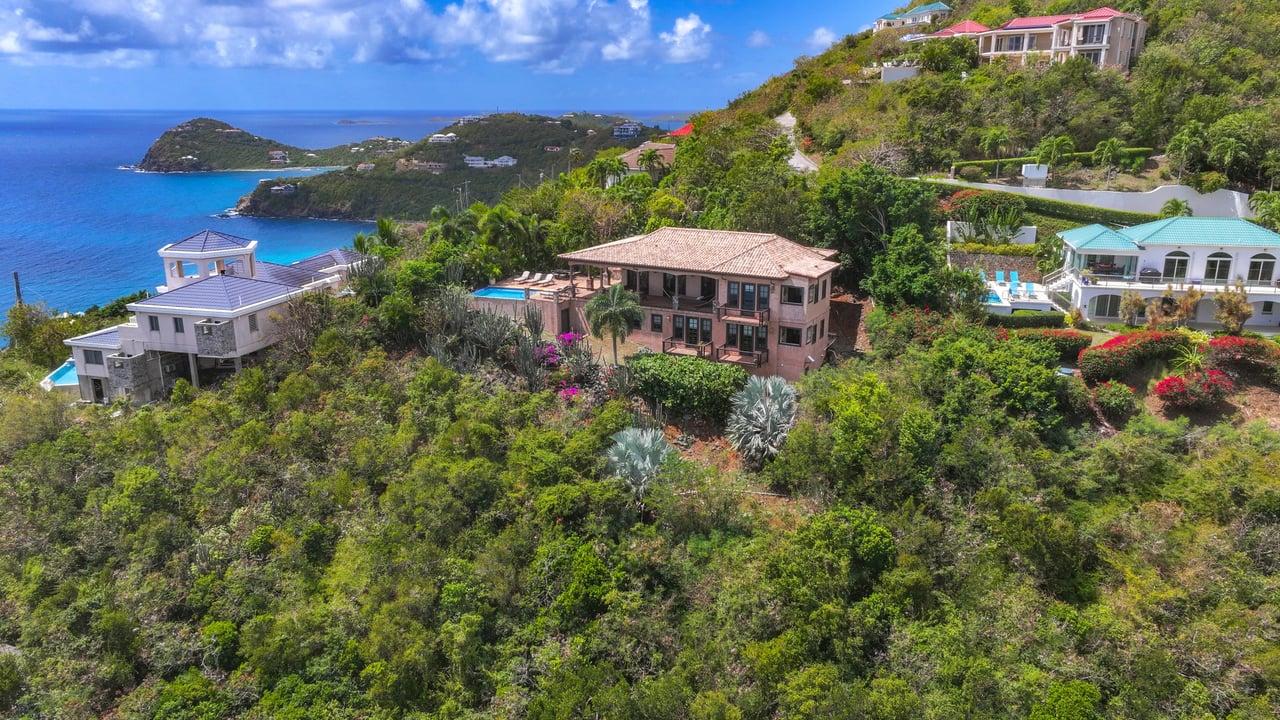
The families and individual owners who held onto property inside what became park boundaries, going back to Rockefeller's original donation, didn't all sell. Some held out through decades of subsequent acquisitions. Those holdouts are the reason a handful of private in-holdings still exist scattered through otherwise protected forest and shoreline, tiny islands of ownership inside a much larger federal preserve.
That's a fundamentally different category of scarcity than "there isn't much land left on a small island." It's a fixed, essentially non-renewable set of parcels, and everyone on St. John who follows real estate understands it that way. Community discussion around one Maho parcel that came up for sale put it plainly: unless someone with resources buys the remaining acreage and donates it to the park, more development is going to happen there eventually, because the land is privately zoned and the owner gets to decide.
The Maho Bay Campgrounds site is the clearest example of how that plays out. For decades it operated as a rustic, beloved eco-tourism camp on land inside the park's footprint. When the lease ended and the land came up for sale, it didn't go to the park. It went to a private buyer, and residents who'd spent summers or worked seasons there wrote openly about their disappointment that it hadn't been folded into the preserve the way Rockefeller's original gift had been. That same footprint, now assembled with adjoining parcels into an 18-plus-acre offering bordering the park, has since been marketed as one of the more significant undeveloped opportunities left on the island, precisely because there is unlikely to ever be another one like it.
What "W-1" Buys You Next Door to a National Park
Zoning near Maho Bay doesn't run in tidy bands. A parcel of less than two acres directly across North Shore Road from the beach carries a W-1 commercial designation, the same classification that permits apartment houses, hotels, guesthouses, restaurants, and night clubs. Walk a few hundred feet in either direction and you're inside federal parkland where none of that is possible. That single W-1 pocket is the site of Maho Crossroads, the open-air food truck and bar that now anchors the beach's east end.
The zoning isn't a loophole. It's simply what survived. A buyer evaluating any North Shore parcel needs the actual zoning classification for that specific lot, not an assumption based on what surrounds it, because two adjoining properties can carry entirely different rules.
Two Parcels, Two Very Different Fights
The permitting record for these in-holdings is public, and it's instructive. Two cases from the same stretch of coastline show how differently a project can go depending on what the land requires.
| Maho Crossroads | 2-A Remainder Estate Miland | |
|---|---|---|
| Size | 1.6 acres | Narrow shoreline lot |
| Zoning | W-1 commercial | Residential, within park boundary |
| Core obstacle | Whether improvement costs exceeded the $75,000 threshold separating a minor from a major Coastal Zone Management permit | Septic feasibility given a high water table, plus a storm-altered vegetation line and setbacks |
| Timeline | Permit application filed January 2019, granted June 2021, appeal filed August 2021, upheld by the Board of Land Use Appeals January 2022, three years total | Application pending since roughly 2017, board stayed the appeal in November 2020 and again in March 2021 for lack of a clear survey, no public resolution found in reporting since |
Maho Crossroads eventually got its answer, though not before a Coral Bay resident named David Silverman spent two appeal cycles arguing the project should have gone through full public review under the territory's Coastal Zone Management Act, and a Virgin Islands Daily News letter to the editor accused the board of resolving the matter on what its author called an invalid technicality. DPNR Commissioner JP Oriol's minor permit stood. Estate Miland, by contrast, was still waiting on a usable survey the last time the board took it up.
The difference wasn't ambition. A tiki bar and food truck complex is a smaller undertaking than a three-story residence. The difference was what the ground itself allowed, and neither project could move until an engineer and a surveyor settled questions that a listing description never raises.
What the Current Listings Are Really Selling
Look at how North Shore acreage near Maho gets described and the pattern is consistent. One recent assemblage of thirteen separately deeded parcels totaling nearly 19 acres, including the former Maho Bay Campgrounds footprint, was marketed on its shared border with what the listing called the forever protected Virgin Islands National Park. Another, an 11.8-acre parcel bounded by park land on the North Shore, was marketed around the historic ruins of Estate Fredricksdal and an old stone bridge on the property, alongside views toward Tortola and Jost Van Dyke.
Neither listing led with square footage comparisons to other North Shore sales. They led with permanence: the park isn't going anywhere, and neither is the boundary that makes this particular acreage the last of its kind. That's the actual product being sold. The beach access and the view are real, but they're not what separates a Maho Bay in-holding from land anywhere else on St. John. The boundary is.
What to Confirm Before You Write an Offer
A buyer serious about acreage near Maho Bay is better served asking questions the median price can't answer.
- Get the specific zoning designation for the parcel itself, not the surrounding area. W-1 pockets exist inside otherwise protected terrain.
- Ask directly whether a septic engineer has assessed the water table on the lot, especially on shoreline sites where storm surge has previously altered the ground.
- Request a current survey showing the vegetation line and setbacks. Hurricane-driven shoreline change is why more than one project on this stretch of coast stalled at the same step.
- Understand where any planned improvement falls relative to the $75,000 threshold that separates a minor Coastal Zone Management permit from a major one requiring public hearings, since that distinction alone has driven multi-year appeals.
- Ask how long the seller has held the parcel and whether any prior permit history exists on file with DPNR. A clean record is worth confirming, not assuming.
None of this makes a Maho Bay parcel a bad investment. It makes it a different kind of investment than the median suggests, one where the scarcity is real and durable but where the timeline to build on it can run years longer than a buyer coming from a mainland market expects.
If you're looking at acreage on St. John's North Shore and want someone who can walk the actual permitting history of a specific parcel before you make an offer, Bonvi Hospitality Group works this market from the island, not from a listing sheet. Let's Connect.