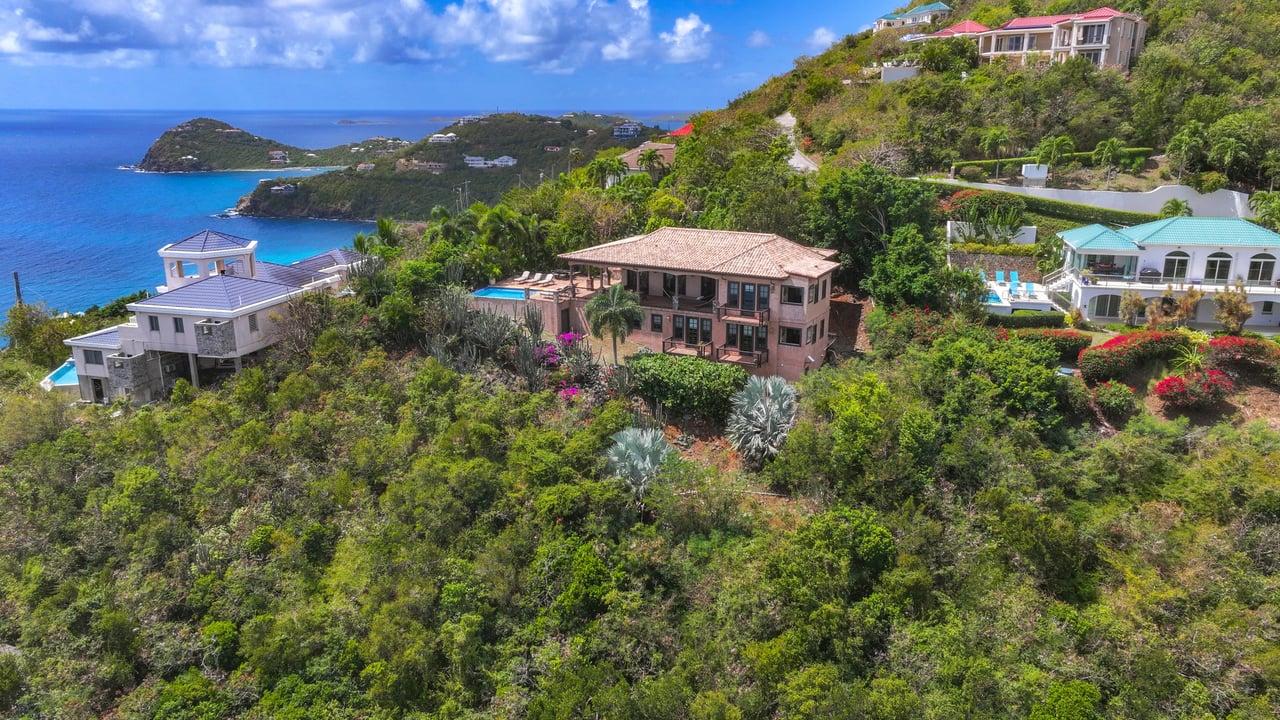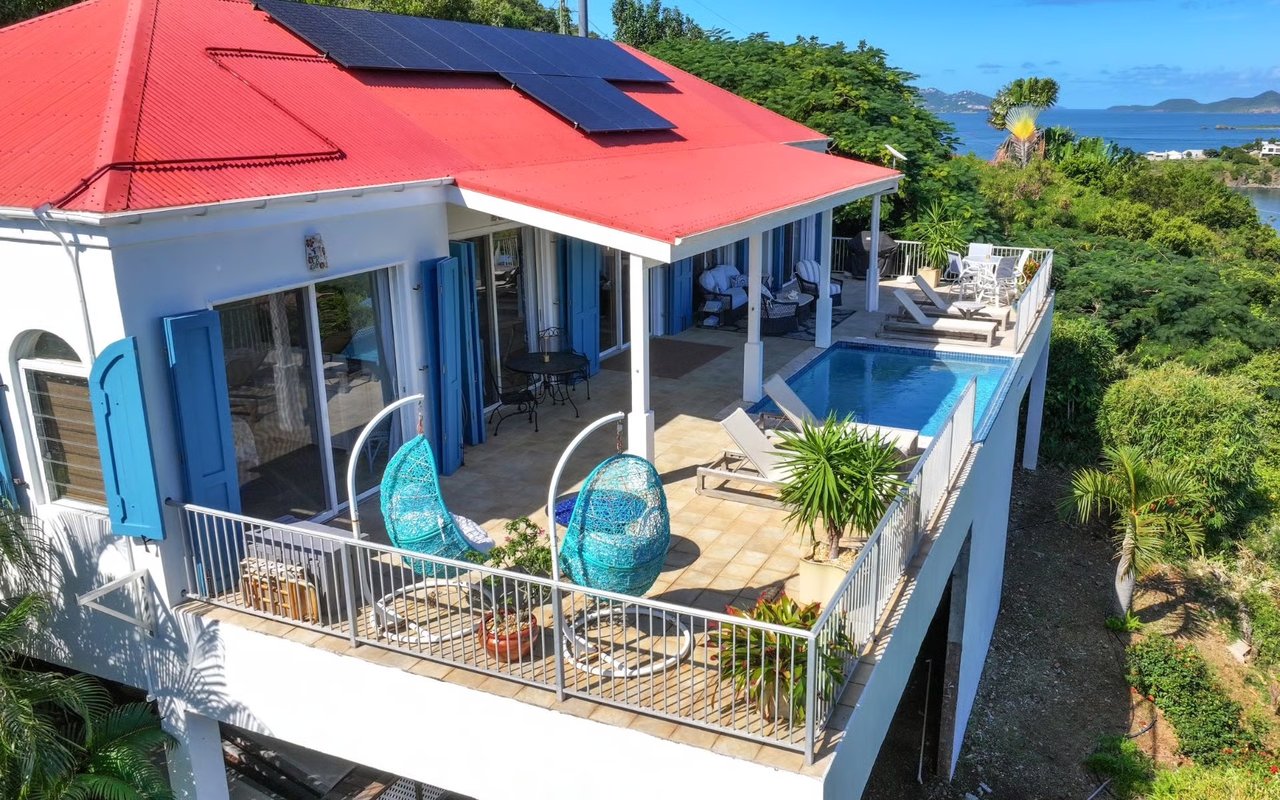
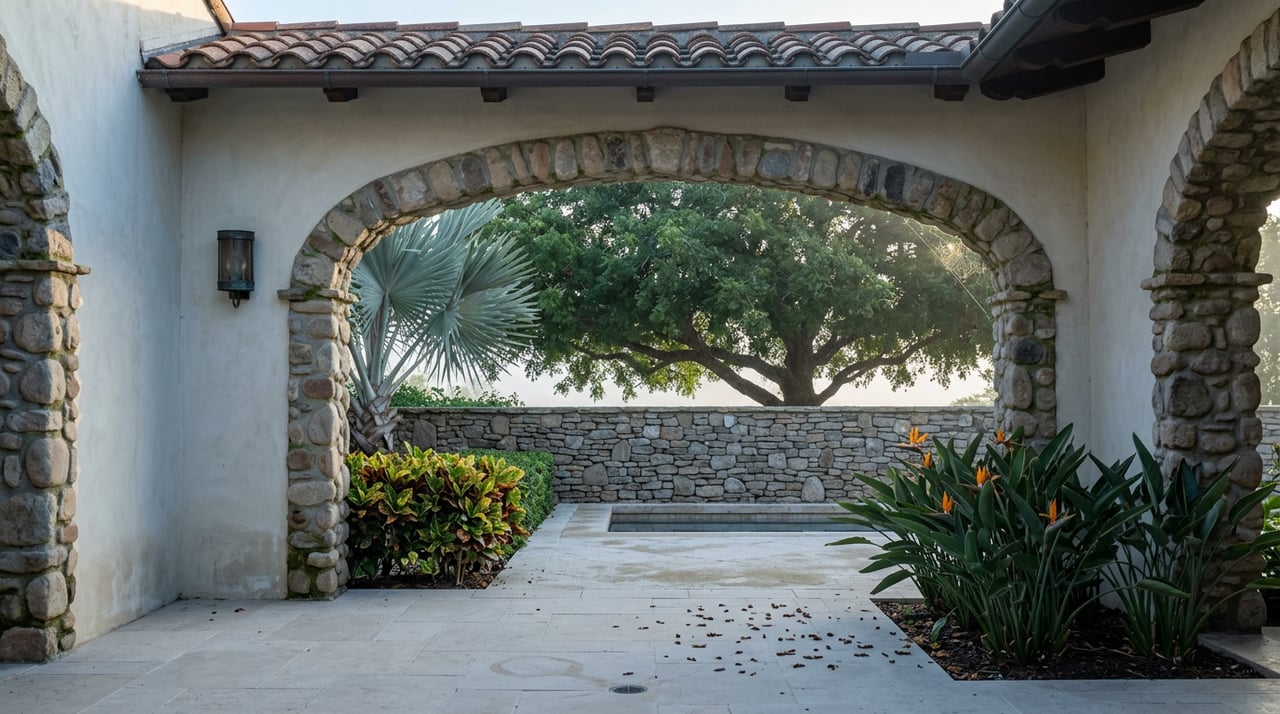
The surprise on a Coral Bay purchase rarely shows up during the showing. It shows up in week three, after the offer is accepted, when the closing attorney pulls the parcel's zoning designation and it doesn't match the lot two doors down. One buyer assumed a straightforward path to a short-term rental license. Another assumed the same building envelope as a comparable hillside lot on the North Shore. Both assumptions were reasonable. Neither held.
Coral Bay has always priced lower than Cruz Bay and the North Shore, and most buyers accept the easy explanation: it's farther from the ferry, the drive is longer, the amenities are thinner. That story isn't wrong. It's just incomplete, and the missing piece is the one that actually costs people time and money once they're past the listing photos.
The Distance Story Everyone Repeats
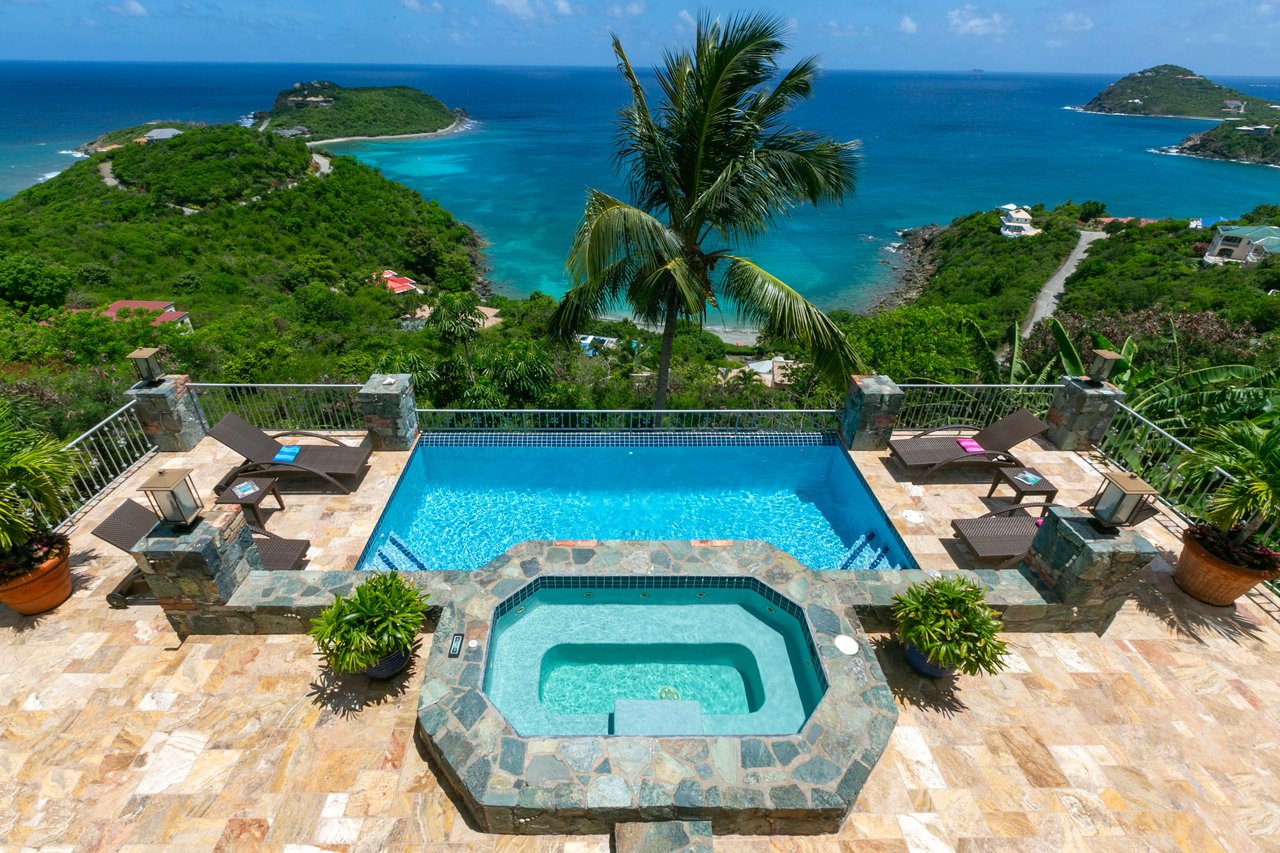
Coral Bay sits roughly eight miles from Cruz Bay, on the quieter, drier east end of the island, and the drive over Centerline Road takes long enough that residents treat a trip to town as an errand worth batching. It grew up as a fishing and sailing community, home to a few hundred year-round residents, sailboats anchored in the harbor, and a small collection of restaurants that close early and run out of the daily special by eight.
That character is real, and it's part of why land and homes here cost less than a comparable view on the North Shore. But distance alone doesn't explain the gap once you start comparing what two similarly priced parcels actually let you build.
What the Recent Numbers Actually Show
The most recent Coral Bay-specific breakout available put the median listing price at $1.3 million as of February 2025, up 5.5 percent from the year before, with a median of $511 per square foot and homes spending an average of 177 days on the market. Land parcels in the same window started as low as $50,000 for a 0.43-acre lot, a price point that simply doesn't exist on the North Shore.
Set that against the wider island. Trailing twelve months into 2026, St. John's average sale price ran near $1.83 million, a figure that one brokerage's year-end reporting pegged at 47 closed home sales averaging $1.834 million, with homes closing within about 9 percent of list price on average. St. John's own market has always run on averages more than medians, because so few transactions happen in any given stretch that one high-end sale can move the whole number. Coral Bay's lower entry point looks, on paper, like a straightforward value play against that backdrop.
It is, but only if the parcel you're buying can do what you think it can do.
Why Coral Bay's Map Looks Different Up Close
Coral Bay wasn't always the quiet side of the island. During the Danish colonial period it was St. John's commercial center, the harbor where sugar was shipped out and the plantation economy did its business. The Emmaus Moravian Church, still standing and listed on the National Register of Historic Places, is one of the clearest physical reminders of that era. So are the zoning lines.
That commercial history left Coral Bay's harbor and hillsides zoned in a patchwork that the more uniformly residential North Shore doesn't have. The territory's zoning code groups land into a handful of categories, and Coral Bay has examples of nearly all of them within a short walk of each other:
| Zoning Category | What It Generally Allows |
|---|---|
| Residential (R) | Single-family homes through condos, depending on the specific sub-district |
| Waterfront (W) | Coastal development, subject to a mandatory 50-foot setback from the high-tide line or first vegetation |
| Agricultural (A) | Farming use, the most restrictive category for residential building |
| Business (B) | Retail and office space with size and setback limits |
| Commercial (C) | A broader range of commercial and mixed-use activity |
| Industrial (I) | Manufacturing, warehousing, and similar heavy use |
A lot zoned Agricultural sitting next to one zoned Business can carry a meaningfully different price per square foot for reasons that have nothing to do with the view. On the North Shore, where the zoning runs more consistently Residential across entire hillsides, buyers rarely have to think about this. In Coral Bay, it's one of the first things worth confirming.
The Permit Track That Doesn't Show Up in the Listing Photos
Zoning is only half of it. Anything touching the coastal zone, which covers a substantial share of Coral Bay's most desirable harbor-adjacent land, falls under a separate Coastal Zone Management review that runs alongside, not instead of, the standard building permit. A straightforward single-family build on a qualifying site can realistically take three to six months from a complete submission to permit issuance, and that clock resets with every request for additional information. Add a CZM review on top, and a buyer who priced their renovation timeline off a North Shore comparable can find themselves months behind before the first wall goes up.
None of this makes Coral Bay a harder place to build responsibly. It makes it a place where the zoning designation and the coastal boundary matter more to the timeline than the acreage does, and that's easy to miss when the sale price is the number doing all the talking.
A Live Example: When "Rare" Zoning Becomes the Headline
It's worth paying attention to how sellers themselves talk about zoning in Coral Bay. One recent land listing in the area led with "Rare Public zoning" as a selling point, which only makes sense in a market where most nearby parcels carry something more restrictive. That single word, rare, is the tell. In a neighborhood where zoning is genuinely uniform, nobody bothers to advertise it. In Coral Bay, it's a differentiator worth naming.
The buyer who understands why that word is doing work in the listing is the buyer who won't be surprised in week three.
What This Means If You're Comparing Coral Bay to the North Shore
The affordability story in Coral Bay is real. Buyers looking for a foothold below the North Shore's price floor, or land under six figures with genuine building potential, will find both here. The area's off-grid character, its solar-ready lots, and its independent streak all fit buyers who want island ownership without the North Shore's price tag or its more manicured feel.
What the median price doesn't show is that the discount comes bundled with more homework. A parcel's zoning designation and its position relative to the coastal zone boundary tell you more about what you can actually do with the property than its distance from Cruz Bay ever will.
A few questions worth asking before writing an offer in Coral Bay:
- What is the parcel's current zoning designation, and does it match the intended use, whether that's a personal home, a short-term rental, or future subdivision.
- Does any portion of the lot fall inside the coastal zone boundary, which would trigger a separate CZM review in addition to the standard building permit.
- What is the floor area ratio for the specific zoning sub-district, since slope and setbacks on a hillside lot can cap buildable square footage well below what the acreage suggests.
- Has the seller or listing agent confirmed the zoning designation with the Virgin Islands Department of Planning and Natural Resources, or is it assumed from a neighboring parcel.
None of these questions require a lawyer to ask first. They just require asking before the offer, not after.
Coral Bay's harbor, its hiking up Bordeaux Mountain, and its evenings at places like Skinny Legs and Aqua Bistro are the reasons people fall for the east end of St. John in the first place. The zoning map is the reason that affection needs to come with a little due diligence before it becomes a deed.
If you're weighing a Coral Bay lot against something on the North Shore, or trying to figure out what a specific parcel's zoning actually allows, Bonvi Hospitality Group can walk the zoning and permitting picture with you before you write an offer, not after. Let's Connect.