By The Bonvi Hospitality Group
Living sustainably on St. John is one of the the most intelligent ways to live on a small island with finite resources, a fragile ecosystem, and an infrastructure that requires residents to think carefully about what they consume and what they put back into the environment. We have been on this island for 15 years, and the residents who live most comfortably here tend to be the ones who have learned to work with the island rather than against it. The habits and systems that support sustainable living on St. John also make island life more resilient, more economical, and more connected to the place itself.
Key Takeaways
-
St. John's natural environment is one of the primary reasons people choose to live here
-
Solar energy is one of the most practical and impactful upgrades a St. John homeowner can make, given the island's sun exposure and the cost of grid electricity
-
Rainwater collection through well-maintained cisterns is the foundation of water management on St. John, and understanding yours is essential
-
Native and drought-tolerant landscaping reduces water demand, maintenance burden, and chemical use near the island's reef and coastal ecosystems
Start With Your Cistern
On St. John, there is no municipal water supply. Water comes from rain collected on rooftops and stored in cisterns. Understanding and maintaining your cistern is not just a sustainability practice, it is the foundation of self-sufficiency on the island.
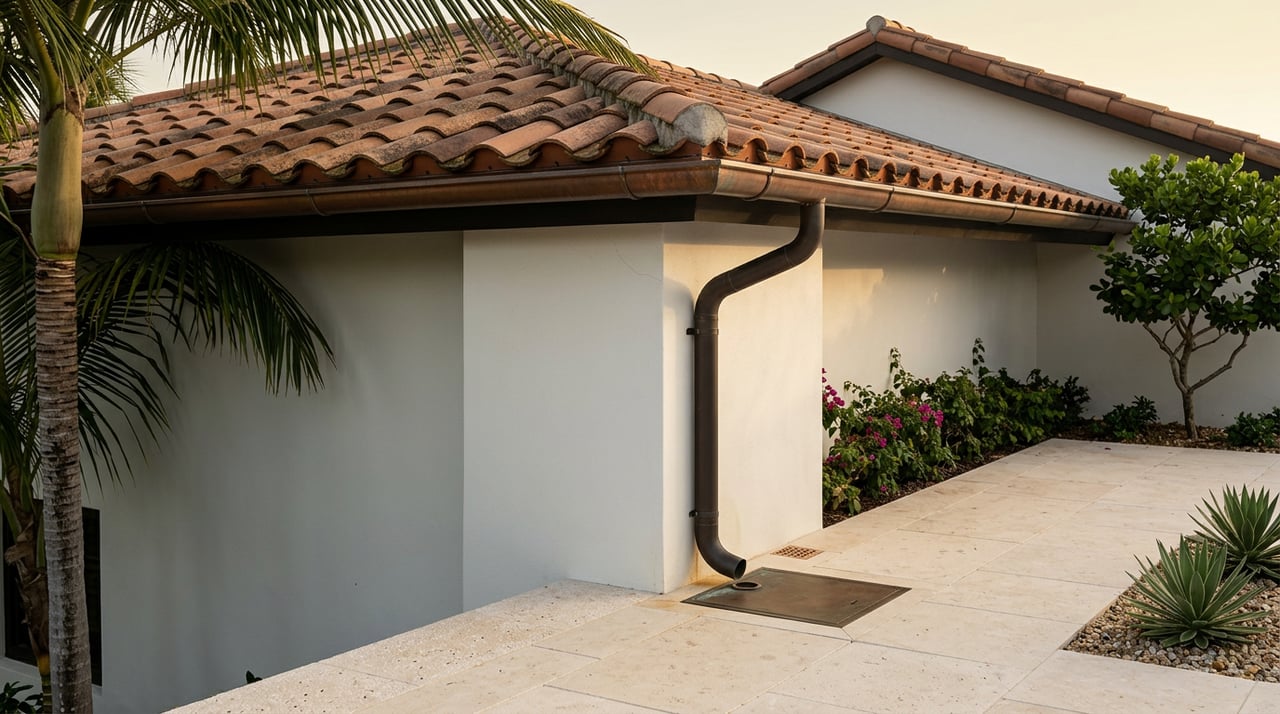
A well-maintained cistern of appropriate size reduces dependence on delivered water, which is both expensive and resource-intensive. Regular inspection, cleaning, and gutter maintenance keeps stored water clean and maximizes what you collect from each rain event. Investing in filtration at the point of use adds quality and confidence.
A well-maintained cistern of appropriate size reduces dependence on delivered water, which is both expensive and resource-intensive. Regular inspection, cleaning, and gutter maintenance keeps stored water clean and maximizes what you collect from each rain event. Investing in filtration at the point of use adds quality and confidence.
How to Get the Most From Your Cistern
-
Schedule regular cistern cleaning and inspection; most island homes benefit from cleaning every one to two years depending on usage and collection surface conditions
-
Keep gutters and catchment surfaces free of debris so rainfall moves cleanly into storage rather than picking up contamination along the way
-
Install a quality filtration system at the point of use for drinking water
-
Understand your cistern capacity relative to daily household use so you can plan during drier periods and make informed water conservation decisions
Go Solar
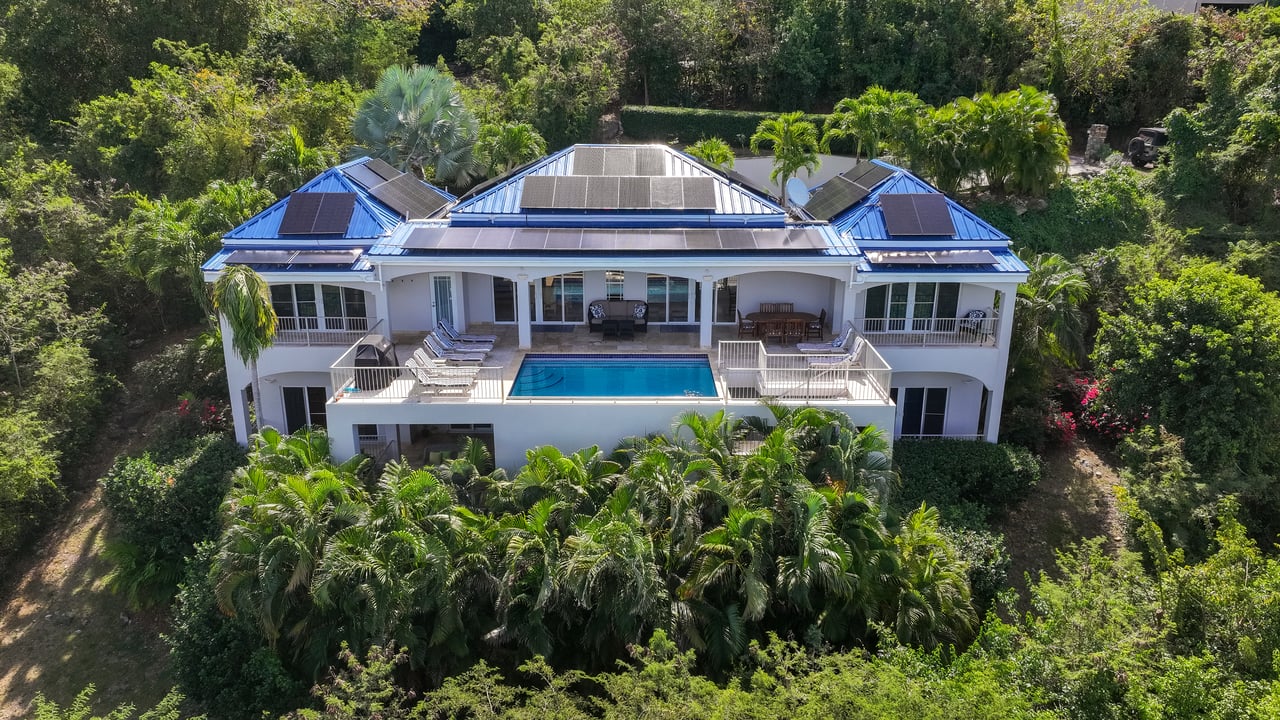
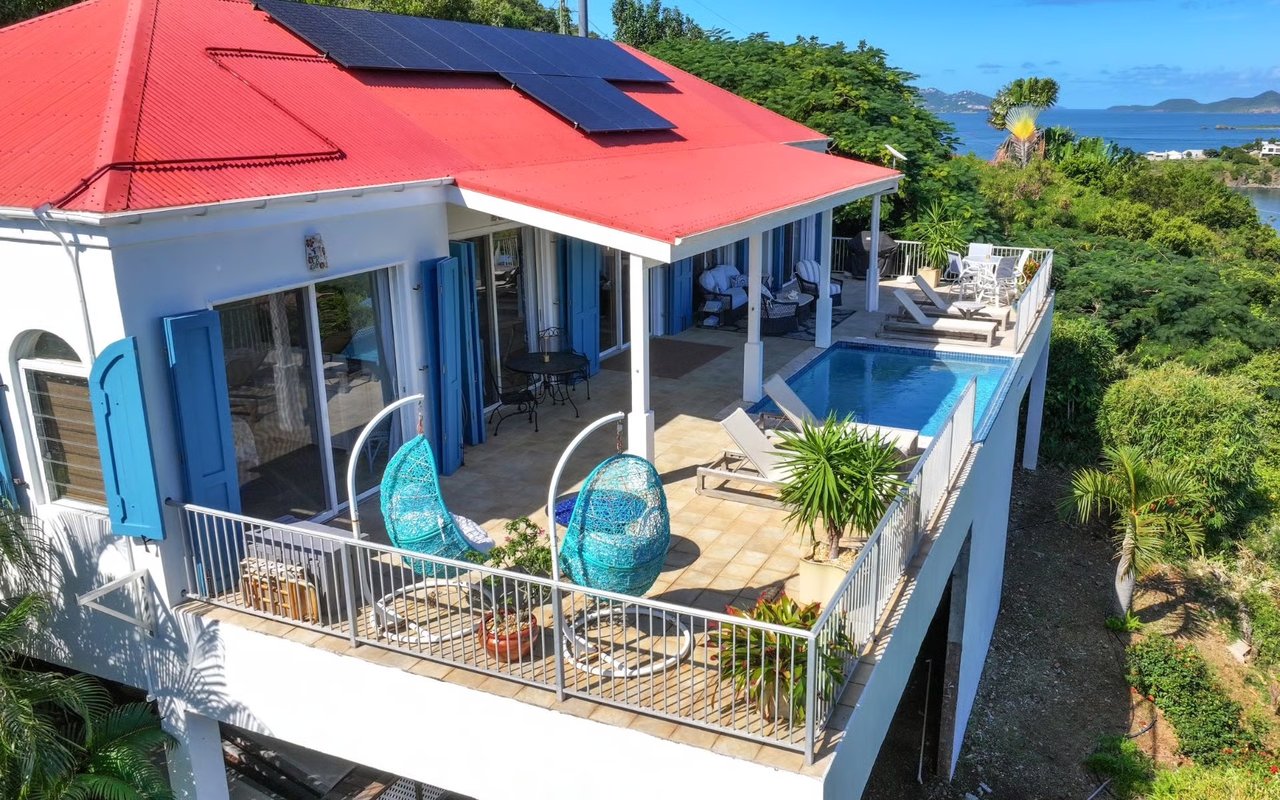
The argument for solar energy on St. John is straightforward. The island receives abundant sun year-round, the cost of grid electricity in the USVI is among the highest in the United States, and solar technology has matured to the point where the economics are compelling for most homeowners.
A well-designed installation with battery storage can dramatically reduce or eliminate dependence on grid electricity while providing resilience during outages. Beyond the economics, solar generation is simply appropriate to where we live, as it does not rely on importing and burning fossil fuels to power daily life.
A well-designed installation with battery storage can dramatically reduce or eliminate dependence on grid electricity while providing resilience during outages. Beyond the economics, solar generation is simply appropriate to where we live, as it does not rely on importing and burning fossil fuels to power daily life.
What to Consider When Going Solar on St. John
-
Work with an installer who has specific USVI experience, since island installations have different structural and regulatory considerations, including hurricane-rated mounting requirements
-
Size the system with battery storage in mind so the installation provides resilience during grid outages, not just daytime offset
-
Understand USVI net metering policies and any available incentives before committing to a system configuration
-
Factor in the salt air environment when selecting equipment
Use Native Plants and Reduce Chemical Use
The reef and coastal ecosystems around St. John are among the most ecologically significant in the Caribbean, and what goes on private land directly affects what ends up in the water. Fertilizers, pesticides, and herbicides that run off during rain reach the reef and contribute to the stresses threatening coral health.
Native and naturalized plants adapted to St. John's climate require little to no supplemental fertilizer, far less water than introduced species, and no intensive chemical management, making them the most sustainable and ultimately the most practical landscaping choice.
Native and naturalized plants adapted to St. John's climate require little to no supplemental fertilizer, far less water than introduced species, and no intensive chemical management, making them the most sustainable and ultimately the most practical landscaping choice.
Landscaping Practices That Support the Island Ecosystem
-
Choose native and naturalized plants adapted to St. John's rainfall patterns and soil conditions that require minimal supplemental irrigation once established
-
Eliminate or significantly reduce synthetic fertilizers, pesticides, and herbicides
-
Use organic mulch in garden beds to retain moisture, reduce water demand, and build soil health naturally over time
-
Compost kitchen and garden waste to build soil fertility without synthetic inputs and reduce the volume of waste leaving the property
Reduce Waste Thoughtfully
Waste management on St. John is not the invisible background infrastructure that mainland residents are accustomed to. The island has limited landfill capacity, and shipping waste off island has significant cost and environmental implications.
Composting kitchen scraps eliminates a large fraction of household waste and produces something useful for the garden. Avoiding single-use plastics matters more here than almost anywhere, given the proximity to the ocean and the speed with which plastic can move from land to water. Choosing durable, quality goods over disposable alternatives reduces waste over time and is simply more economical in a market where replacement goods are expensive and difficult to source.
Composting kitchen scraps eliminates a large fraction of household waste and produces something useful for the garden. Avoiding single-use plastics matters more here than almost anywhere, given the proximity to the ocean and the speed with which plastic can move from land to water. Choosing durable, quality goods over disposable alternatives reduces waste over time and is simply more economical in a market where replacement goods are expensive and difficult to source.
How to Reduce Household Waste on St. John
-
Compost kitchen scraps — fruit and vegetable waste, coffee grounds, and eggshells — to eliminate a large fraction of household waste and produce valuable garden amendment
-
Bring reusable bags, containers, and bottles to avoid single-use packaging whenever possible
-
Buy in bulk when practical to reduce packaging waste and take advantage of cost savings in an island market where retail prices are elevated
-
Choose durable, quality goods over disposable alternatives, since replacement costs and sourcing difficulty on island make durability a practical as well as environmental priority
FAQs
Is solar practical for all home types on St. John?
Most single-family homes and villas have sufficient roof area and orientation for a meaningful solar installation. The key variables are roof condition, structural integrity, and available southern exposure.
How do residents handle recycling on St. John?
St. John has a recycling program for some material categories and the Cruz Bay transfer station accepts certain materials. The most effective waste reduction strategy is avoiding waste generation at the source rather than relying on recycling infrastructure.
Does sustainable living require major investment to get started?
Not at all. The highest-impact practices — cistern maintenance, native landscaping, composting, and waste reduction — require attention and habit more than significant financial investment. Solar is a meaningful capital investment but one with strong long-term returns. Starting with habits and working toward infrastructure investments over time is a practical approach.
Contact Us Today
We have spent 15 years living on this island and we care deeply about its future. Whether you are a new homeowner, a long-term resident, or someone considering a move to St. John, we are happy to share what we have learned about living well and living thoughtfully here.
Reach out through The Bonvi Hospitality Group to connect with our team and get started.
Reach out through The Bonvi Hospitality Group to connect with our team and get started.